
Engines
The Story of Filters

The 1940s saw the introduction of filtering systems on mass-produced automobiles, and the 1960s saw the introduction of disposable “spin on” oil filters, making oil filter changes much more convenient. Over the next few decades, improvements in the internal architecture and filter material increased the efficiency of the filters significantly. Today, all vehicle engines, whether…
Read MoreAll About Performance Air Filters

Not replacing your air filter at the recommended intervals may provide noticeable indicators of needing replacement. Changing the engine air filter is usually recommended every 10,000-15,000 miles or 12 months. You may need to have your oil changed more frequently if you live in a dusty or rural region like Scottsdale, or San Antonio. Driving in…
Read MoreWhat are the Best Intake Manifolds

Vic Edelbrock’s 1938 purchase of a 1932 Ford Roadster marked a turning point in his small company’s history. By designing and manufacturing the first Edelbrock intake manifold, Vic Sr. started the hotrod era. Edelbrock Sr. knew that a strong top-end design might liberate horsepower. He designed the first 180-degree dual-plane performance intake for Flathead V8s. Choosing the correct…
Read MoreLooking at a Great Crate Engine

Purchasing a crate engine built by a reputable professional can be extremely beneficial. When your vehicle’s original engine fails, crate engines are the quickest way to breathe new life into it. In the simplest terms, a crate engine is an engine that is completely assembled and delivered directly to you – in a…
Read MoreTurbos Are Exhausting
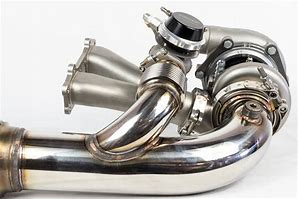
Making sure your turbocharger is the right size for your engine means knowing how much horsepower it can produce. As many as 22% of the gasoline engines and 75% of the diesel engines on the road have a turbocharger, which helps them run better. These days, turbochargers aren’t just for making your car run more…
Read MoreSuperchargers: Not Just Blow Hards

Though we vehicle builders like to think we’re more intelligent than the ordinary car guy, we all have a soft spot for excessive and gratuitous demonstrations of horsepower. A supercharger sticking out of the hood screams terrible extravagance. Also, bigger is better. Still, it’s best to think twice before spending your hard-earned money on a…
Read MoreChevelle SS = Big Block Beast

When the Chevrolet Chevelle was released in the mid-1960s, it was GM’s most adaptable brand. By the second generation, the A-body platform had given birth to sedans, coupes, wagons, the El Camino truck, and convertibles, and would later underlie the personal luxury Monte Carlo coupe. From a performance standpoint, the 1968–72 group was the best…
Read MoreBuick Engines from Nailhead to Now

When Buick’s overhead-valve inline-eight was replaced by the Nailhead in 1953, the Nailhead became the company’s first pushrod V-8. The engine was named after the little valve covers that sat atop the heads. Vertically placed valves created a nearly hemispherical combustion chamber beneath the valve covers. The Nailhead enjoyed revving due to its substantially over…
Read MoreOldsmobile Torque Monster Engines

Oldsmobile built the Rocket V8 engine from 1949 through 1990. The Rocket and the 1949 Cadillac V8 were GM’s first post-war OHV crossflow cylinder head V8 engines. Long before the corporate Chevrolet 350 small-block and Cadillac Northstar engines, Olds built their own V8 engine family. The engine block and cylinder heads were cast by Saginaw…
Read MoreChevy (Mouse) Small Block

Thus, evolution is clearly beneficial, and the small block Chevy engines that have been blasted out of General Motors engine facilities worldwide are no exception. With the introduction of the small block engine for the 1955 model year, no engineer could have envisaged where we would be today with 638hp, 376 cubic inch engines capable…
Read More